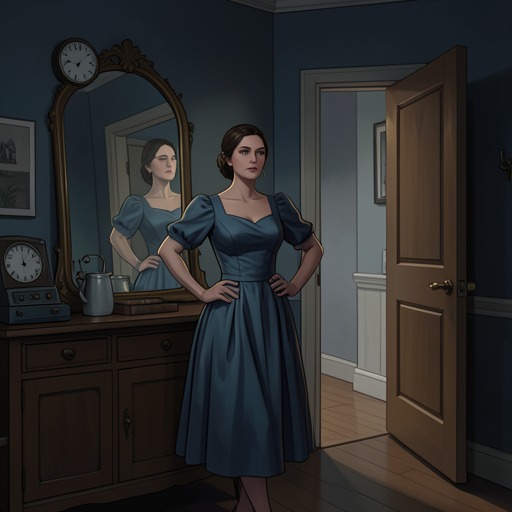
The failed consummation on Edward and Florence’s wedding night
On Chesil BeachThe failed consummation on Edward and Florence’s wedding night is the crisis that converts an unspoken difficulty into an open rupture. On their first night as a married couple, each tries to navigate intimacy without experience or a shared language for discussing it. Florence’s effort to comply ends in acute distress; she leaves the hotel and runs towards Chesil Beach. The encounter remains unspoken between them afterward, and the marriage is set on course for dissolution.
Setting and inherited expectations
Edward and Florence are young, educated, and virgins on their wedding night. Their wedding at St Mary's Church, Oxford, has gone well, and they reach a Georgian inn on the Dorset coast in the early evening. They eat in a small sitting room beside a narrow four-poster bed. The occasion is formally arranged and closely observed: the meal is served by hotel staff, and Edward watches for any sign that they might mock the newlyweds. Florence, unlike Edward, has stayed in hotels before, but neither has a practical vocabulary for the difficulty awaiting them.
Their circumstances belong to a culture in which premarital chastity and marital sexual expectations coexist with little useful discussion of sexual problems. During his university years, Edward understood that many women were expected to reserve sex for a future husband; he also saw how an unplanned pregnancy could lead directly to marriage. Rumours of the contraceptive pill and of less constrained sexual lives elsewhere seemed distant from his own social experience. Among his male friends, talk tended instead toward jokes and boasting. The wedding does not suddenly provide the couple with knowledge or candour that their courtship lacked.
The approach to intimacy
Before the wedding, Edward had abstained from masturbation for more than a week because he wanted to be in good form for Florence. He had long treated her shyness as coyness and imagined it as part of a hidden sensual nature. He also persuaded himself that he preferred her restraint. Inwardly, it suited his own lack of confidence: a more sexually demanding partner might have frightened him. Their courtship had proceeded through observed, largely unspoken protocols, and neither had felt able to begin an intimate conversation.
At the inn, the couple's immediate surroundings sharpen the contrast between social duty and personal freedom. The supper is elaborate, though the wedding meal has left them not hungry; outside, the sea and beach are close. They could leave the meal and walk along the shore, but the couple remain within conventions of adult respectability and obligation. Edward feels drawn to the beach and troubled by mounting pressure, yet cannot find a way to suggest leaving. The formal dinner and the bedroom next door make the expected transition into married life seem both unavoidable and difficult to name.
The failed encounter
When the couple begin to approach sex, Florence is trying to keep calm and to please Edward, rather than expressing what she wants or fears. She remembers advice from a red manual and attempts to follow it, believing that she can help the encounter proceed. Edward reacts with an involuntary release before intercourse can take place. The attempt therefore fails, but the more consequential turn is Florence’s response: she experiences intense revulsion and shame, recognizes that she cannot conceal it, and becomes distressed at the thought of Edward witnessing her in that state.
The scene reveals that Florence’s difficulty is not simply the ordinary shyness Edward had assumed. Her effort to appear composed gives way to a reaction she cannot control. She also associates the distress with troubling memories that she had previously decided were not really hers, without explaining their origin. The narrative does not resolve that history here. Instead, it shows the distance between Edward’s mistaken interpretation of her reserve and the fear and aversion Florence is struggling to contain.
Flight and consequences
Florence cannot remain in the room with Edward. She takes her shoes, crosses the sitting room and passes the remains of the meal, then runs downstairs, out of the inn, and across the lawn towards Chesil Beach. Her flight gives physical form to the couple’s failure to communicate: the encounter has become intolerable to her, while neither has found words that might help them understand what has happened. The run does not resolve the conflict; it takes her away from its immediate setting.
The consequences extend beyond the night. A week later, Edward learns that Florence’s mother has arranged for the wedding presents to be returned and that their parents have quietly set a divorce in motion on grounds of non-consummation. Edward writes formally to Florence’s father, regrets a change of heart, and offers an apology and farewell, but does not name Florence in the letter. After his anger fades, he still does not contact her. In the changed sexual climate of the late 1960s, he looks back on Florence’s earlier proposal differently, seeing generosity and freedom in what he had once failed to understand. The later reassessment underscores the event’s governing irony: the couple’s silence is not proof that the difficulty is trivial, but one of the conditions that prevents them from finding a way through it.